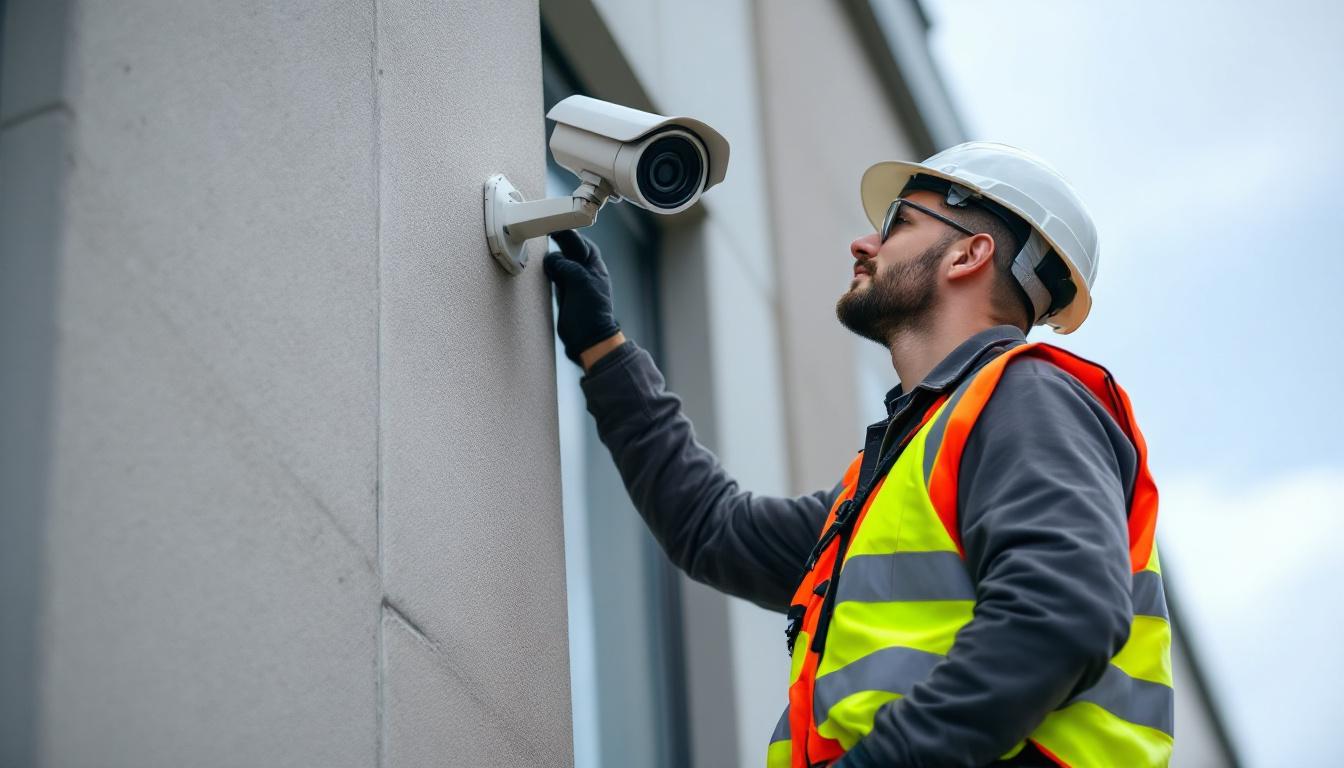
Marketing for Security Camera Installers: Get More Commercial Contracts
Marketing for security camera installers in Australia that want more commercial contracts requires a fundamentally different approach to residential referral marketing — you need to be visible to procurement managers, property managers, and business owners who make buying decisions based on credibility, capability, and compliance, not just who their neighbour recommended.
Commercial security contracts are more valuable, more consistent, and more scalable than residential one-off installs. A single commercial client — a shopping centre, a school, a logistics warehouse — can be worth more annually than 50 residential jobs. But getting in front of these clients and winning their trust requires deliberate marketing, not word of mouth.
This guide covers the most effective marketing strategies for security camera installers aiming to grow their commercial client base across Australia.
The Commercial Security Client Decision Process
Commercial buyers for security systems are different from residential customers. Understanding this changes how you market.
Residential: Homeowner has a problem (break-in, perceived risk), searches for a solution, compares 2–3 quotes on price and reviews, makes a decision in days.
Commercial: Procurement manager or facilities director identifies a need (risk assessment, compliance requirement, upgrade cycle), may issue a formal tender or quote request, evaluates multiple vendors on capability, compliance, and references, decision often takes weeks to months.
What commercial buyers care most about:
- Compliance and licensing — especially for sites requiring specific certifications
- Portfolio and case studies — proof you've done similar work at scale
- Response time and ongoing support — commercial clients need reliability, not just installation
- Insurance and liability coverage — they're not risking their facility on an uninsured contractor
- Written proposals, not verbal quotes — the decision goes through layers of approval
Your marketing needs to speak to these concerns.
Building Credibility That Commercial Clients Look For
Before you invest in any marketing channel, make sure your credibility signals are in order. Commercial decision-makers do their due diligence.
Google Business Profile
A professional, well-reviewed Google Business Profile is often the first thing a commercial buyer checks. Make sure yours includes:
- Clear description of commercial capabilities (not just residential)
- Photos of commercial installations (with client permission)
- A strong review rating — 4.5+ stars with 30+ reviews signals a legitimate business
- Your licences and certifications mentioned in the business description
Website
Your website needs a dedicated commercial page. It should cover:
- Industries you service (retail, healthcare, logistics, education, hospitality, strata, government)
- Types of systems you install (CCTV, access control, video analytics, remote monitoring integration)
- Compliance and licensing credentials (ASIAL membership, Security Licensing details by state)
- Case studies with named clients (where permitted) or anonymised results
- Technical specifications you can work to
- A clear call to action: "Request a Commercial Security Assessment"
Case Studies
Case studies are the most powerful marketing asset for commercial security. A two-page PDF showing a client's challenge, your solution, the systems installed, and the outcome (crime reduction, compliance achieved, monitoring system implemented) gives a prospect confidence that you've solved their exact problem before.
Start building case studies from your first commercial jobs. Most clients will agree to a case study if you ask professionally and offer to let them review it before publishing.
Channel 1: LinkedIn for Commercial Security Lead Generation
LinkedIn is one of the most effective channels for commercial security marketing because your buyers are on it. Facilities managers, property managers, procurement officers, and business owners all use LinkedIn regularly.
What works:
- Optimise your personal profile — your LinkedIn profile as the business owner or key contact is your credibility page. Professional photo, clear headline ("Commercial Security System Installer | NSW/VIC | ASIAL Member"), detailed experience section.
- Post content consistently — case studies, security tips, industry news, "before and after" system upgrades. One or two posts per week builds visibility with your target audience.
- Connect strategically — send connection requests to property managers, facilities managers, and business owners in your target industries and service area. Don't pitch immediately; build the connection first.
- Direct outreach — once connected, a brief, professional message introducing your services and offering a free site security assessment is a legitimate lead generation approach. Keep it short and focused on their interests, not your features.
Channel 2: Google Ads for Commercial Security
Google Search Ads for commercial security terms can be highly effective. Commercial buyers actively search — they just use different keywords than residential customers.
Commercial-intent keywords to target:
| Keyword | Commercial Intent |
|---|---|
| Commercial CCTV installation [city] | High |
| Security camera system for warehouse | High |
| CCTV installation for retail store | High |
| Access control system installer [city] | High |
| Security camera maintenance contract | High |
| Security camera upgrade quote [city] | High |
Landing page for commercial ads:
Don't send commercial ad traffic to your homepage. Create a dedicated landing page for commercial enquiries with:
- Clear commercial focus in the headline
- Your licensing and accreditation front and centre
- A short form to request a commercial security assessment
- Social proof (review count, case study reference, ASIAL logo)
Channel 3: Tender Platforms and Government Contracts
Australian government departments, councils, and large organisations regularly post security upgrade and installation tenders on procurement platforms.
Platforms to register on:
- AusTender (federal government: tenders.gov.au)
- State-specific procurement portals (eTendering in NSW, VendorPanel, etc.)
- MERX for larger commercial tenders
Getting on government approved supplier panels takes work upfront — compliance documentation, insurance certificates, reference checks — but once you're on, you receive tender invitations directly. Government contracts are typically well-paying and multi-year.
For smaller commercial clients:
Many businesses don't formally tender — they ask for quotes from a shortlist of providers. Getting onto that shortlist is a relationship game. Referrals from other trades (electricians, builders, fit-out contractors) who work on the same sites are a highly reliable source of commercial security enquiries.
Channel 4: Partnership With Electricians, Builders, and Fit-Out Contractors
Electricians, builders, and commercial fit-out contractors work on every commercial property you'd want to install security systems in. They regularly get asked about security by their own clients, and most have no solution to refer.
A formal referral partnership — where you pay a referral fee or provide reciprocal leads — puts you on their recommendation list.
How to set this up:
- Identify the top 10–15 commercial electricians and builders in your area
- Reach out with a specific value proposition: "When your clients ask about security cameras or access control, I'd like to be your go-to referral. We pay a [X%] referral fee on every job we complete."
- Deliver on every referred job — protect the relationship by delivering excellent work and keeping the referring trade updated on progress
- Stay in contact quarterly to keep the partnership active
Channel 5: Industry-Specific Marketing
Certain industries have recurring security needs and are often overlooked by security installers who focus on generic commercial marketing.
High-value verticals for security camera installers:
| Industry | Security Need | Decision Maker |
|---|---|---|
| Retail chains | Loss prevention, shrinkage reduction | Loss prevention manager / store operations |
| Childcare and schools | Child safety compliance | Principal / owner |
| Healthcare facilities | Patient safety, asset protection | Facilities manager |
| Logistics and warehousing | Loading dock security, inventory control | Operations manager |
| Strata buildings | Common area monitoring | Strata manager |
| Hospitality | Entry control, incident documentation | General manager |
For each vertical, your marketing message should speak to the specific problem, not generic "security solutions." A school doesn't want a "comprehensive CCTV package" — they want a system that helps them meet their duty of care obligations and respond quickly to incidents.
Staying Top of Mind Between Contracts
Commercial clients don't need new security systems every year, but they do need maintenance, upgrades, and expansions. Staying in contact between contracts keeps you top of mind when they're ready to spend again.
What to do:
- Quarterly check-in email or call with existing commercial clients
- Annual security audit offer — offer a complimentary review of their current system
- Case study and industry news emails — two or three per year, relevant content only
- Flag upcoming technology changes (new camera technology, compliance updates) that might affect their system
A commercial client who hears from you three or four times per year in a genuinely helpful way will renew with you, expand their system with you, and refer other businesses to you.
Frequently Asked Questions
What licences do security camera installers need to work commercially in Australia? Licensing requirements vary by state. In NSW, a Security Industry Licence is required for installing or maintaining security equipment. Victoria, Queensland, and other states have similar requirements. ASIAL (Australian Security Industry Association Limited) membership also signals credibility to commercial buyers. Always check your state's specific requirements and display your credentials in all marketing materials.
How do I get my first commercial security contract? Start with smaller commercial clients — small retail stores, offices, restaurants — where the decision maker is typically the owner and the decision process is shorter. Use these early jobs to build case studies and reviews. Referral partnerships with electricians or builders who work on commercial fit-outs are often the fastest route to the first commercial client.
Should security camera installers use social media for commercial marketing? LinkedIn yes, definitely. Facebook can work for reaching business owners who use it personally, but LinkedIn is the primary professional network where commercial decision-makers spend time. Instagram is useful for showcasing installation quality visually and building brand awareness.
What is a realistic timeline for growing a commercial security client base? Three to six months to land the first few commercial contracts through active outreach and referral partnerships. Six to twelve months to build a consistent pipeline. Commercial relationships compound over time — once established, a commercial client often refers others.
How do I price commercial security camera installations? Commercial jobs are priced based on scope, system complexity, site conditions, and ongoing support requirements. Quote on a per-camera or system basis, with separate pricing for installation, equipment, and maintenance contracts. Maintenance contracts (annual site visits, camera health checks, software updates) are a reliable recurring revenue stream worth pricing competitively to win.
If you're a security camera installer ready to move beyond residential work and start winning commercial contracts, Kabooyaa can help you manage leads, automate follow-up, and keep existing commercial clients engaged. Built for Australian trade businesses. Start at kabooyaa.com.au.


