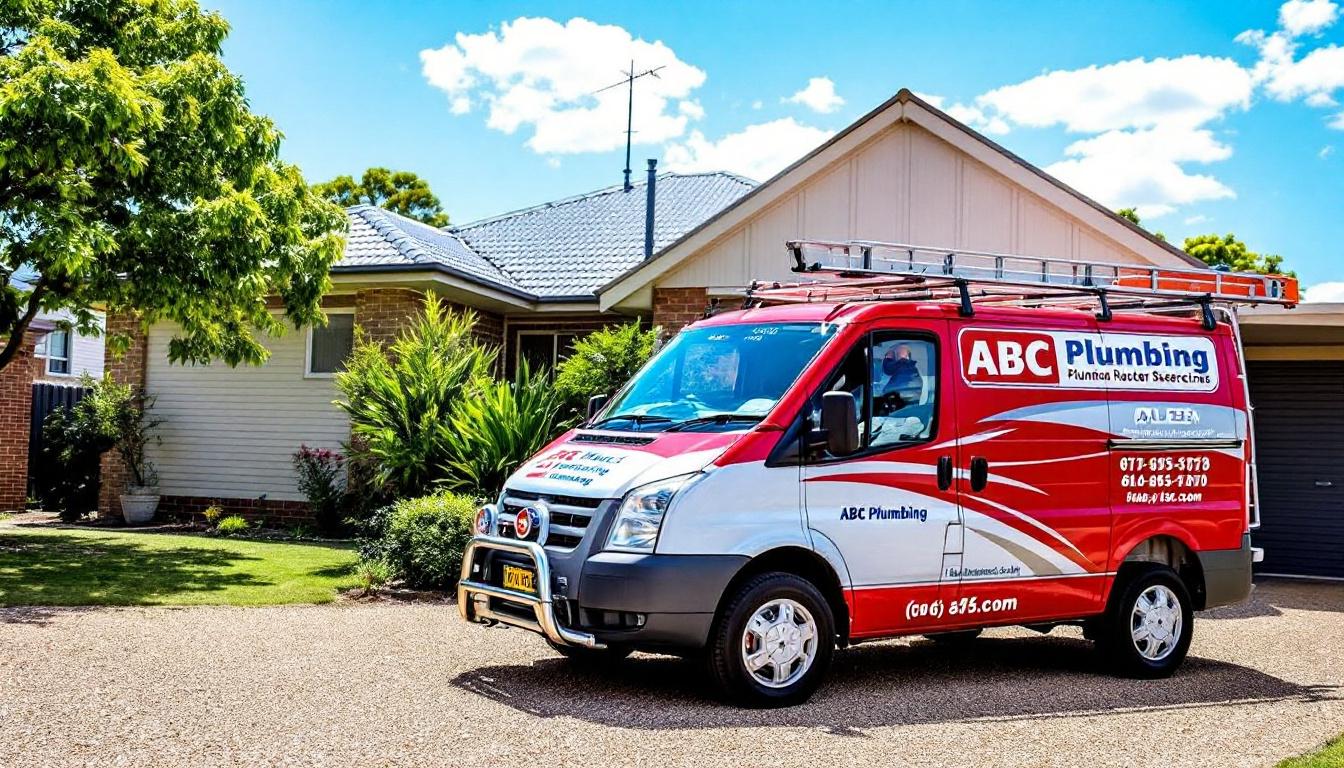
How Plumbers Can Rank #1 on Google Maps in Their Suburb
If you want to rank number one on Google Maps in your suburb as a plumber, the formula comes down to three things: a fully optimised Google Business Profile, a steady stream of genuine reviews, and consistent signals that confirm you are active and relevant in your local area. Most plumbers ignore at least two of these — which is exactly why the opportunity is still wide open in most Australian suburbs.
How Google Maps Rankings Work for Plumbers
Google Maps ranks local businesses based on three factors:
- Relevance: Does your listing match what the person searched?
- Distance: How close is your business (or service area) to the searcher?
- Prominence: Are you well-known, well-reviewed, and frequently engaged with?
You cannot control distance completely — but relevance and prominence are entirely within your control. And most plumbers have not done the work on either.
Step 1: Nail Your Google Business Profile Basics
Before anything else, make sure your profile is complete, verified, and accurate. Go to google.com/business to check.
Primary category: Set it to "Plumber". Not "Plumbing supply store", not "Contractor" — "Plumber" is the correct primary category.
Secondary categories to add: - Drainage service - Gas installation service - Hot water system supplier - Bathroom remodelling contractor (if applicable) - Emergency plumber service
The more relevant categories you hold, the more search queries you can appear for.
Service area: Add every suburb you service individually. Do not rely on a radius setting — it is less precise. If you service 20 suburbs, add all 20.
Business description: Write 400–500 characters covering your core services, key suburbs, and any differentiators (24/7 availability, licensed gas fitter, blocked drain specialist, etc.).
Step 2: Add Your Full Services List
Google Business Profile has a dedicated Services section that most plumbers leave half-empty. Fill it out completely with every service you offer:
- Blocked drains
- Emergency plumbing
- Hot water system repair and replacement
- Burst pipe repair
- Roof and stormwater drainage
- Gas fitting and leak detection
- Bathroom renovations
- New home plumbing (rough-in and fit-off)
- Sewer and drainage inspection (CCTV)
- Water pressure issues
- Leaking taps and toilets
Each service entry tells Google what you do — which directly influences which searches trigger your listing.
Step 3: The Review Strategy That Actually Works
Reviews are the most powerful ranking signal for Google Maps after proximity. Here is the hard truth: a plumber with 80 reviews at 4.7 stars will consistently outrank a plumber with 15 reviews at 5.0 stars in the same area.
Volume and recency both matter. Google looks at how many reviews you have and how recently you have been getting them. A business that gets one review every three months signals low activity.
How to get more reviews:
The best time to ask is immediately after the job — while the customer is still standing in front of you and the problem has just been solved. A leaking tap fixed, a blocked drain cleared, a hot water system replaced — the customer is happy and grateful right now. That is the moment to ask.
The most effective script is simple:
"Really appreciate you having us out today. If you have two minutes, we would love a Google review — it helps us a lot. I can send you a link right now if you like."
Send the link via SMS before you leave. Customers who say yes but do not have the link in hand will forget by tomorrow.
Automate the review request: Kabooyaa sends an automatic SMS with your Google review link when a job is marked complete in the system. You never have to remember to ask — it happens every time.
Respond to every review: Thank customers for positive reviews (add a sentence or two mentioning the service performed and suburb — this builds keyword relevance). For negative reviews, respond professionally and offer to resolve offline. Google surfaces businesses that engage with their reviews.
Step 4: Add Photos Consistently
Your listing should have at minimum 15–20 high-quality photos. Add new ones regularly — at least 2–3 per month.
What photos to add:
| Photo type | Ranking value |
|---|---|
| Work completed (blocked drains, hot water installs) | High |
| Before and after comparisons | High |
| Your van parked at a job site | Medium |
| Team photos in uniform | Medium |
| Office or workshop (if applicable) | Low |
Photos showing completed work and real job sites outperform stock photos or logo images. They also build trust with prospective customers who are comparing you against competitors.
Step 5: Post to Your Profile Weekly
The Google Business Profile Posts feature is a ranking signal and a conversion tool. Use it.
Post once or twice per week:
- "Just completed an emergency burst pipe repair in [suburb] — back to normal by 8am" (shows activity + builds suburb relevance)
- "Hot water systems failing more in winter — book a check before the cold hits" (seasonal, drives calls)
- "We now offer CCTV drain inspections with a written report — no more guessing" (service feature)
Each post mentions a service and often a suburb. Over time, this builds a dense signal to Google that you are active, relevant, and working in specific local areas.
Step 6: Build Local Citations
A citation is any mention of your business name, address, and phone number (NAP) on another website. Google cross-references these to verify your business is legitimate and located where you say it is.
Priority citation sources for Australian plumbers:
- Hipages
- Oneflare
- ServiceSeeking
- True Local
- Yellow Pages (yellowpages.com.au)
- Word of Mouth Online (womo.com.au)
- Local council business directories
- Master Plumbers Association directory (if applicable)
Make sure your name, address, and phone number are exactly identical on every platform — including punctuation and abbreviations. Inconsistencies (e.g., "St" vs "Street") dilute the signal.
Step 7: Optimise Your Website for Local Plumbing Keywords
Google Maps rankings are also influenced by your website. At minimum, your homepage should include:
- Your primary keyword in the H1 ("Licensed Plumber [Suburb], [City]")
- Your suburb and surrounding service areas mentioned naturally in the body copy
- An embedded Google Map with your location pinned
- Your NAP (name, address, phone) in the footer — matching your Google Business Profile exactly
- Schema markup for local business (ask your web developer or use a plugin)
If you service multiple suburbs, consider creating individual location pages for each — a page targeting "[suburb] plumber" gives you a far stronger local signal than relying on your homepage alone.
What the Top-Ranking Plumbers in Your Area Are Doing
Pull up Google Maps in your service area and search "plumber [your suburb]". Look at the top 3 results and check:
- How many reviews do they have?
- What is their rating?
- How recently did they receive reviews?
- Do they have photos?
- Is their profile complete?
This tells you exactly what benchmark you need to beat. In most Australian suburbs outside of Sydney and Melbourne, the top-ranking plumber has fewer than 50 reviews. That is a very achievable target.
How Long Does It Take to Rank?
Realistic timelines:
| Baseline position | Expected time to top 3 |
|---|---|
| No profile or unverified | 8–16 weeks (after optimisation + 15+ reviews) |
| Verified but thin profile | 4–8 weeks (with active review building) |
| Decent profile, few reviews | 2–6 weeks (aggressive review collection) |
| Already in top 5 | 2–4 weeks (targeted optimisation) |
Review velocity is the biggest lever. If you can collect 10 reviews in your first month of focused effort, you will outpace the vast majority of competitors.
Frequently Asked Questions
How do I appear in Google Maps for multiple suburbs as a plumber? Set a service area on your Google Business Profile that includes all the suburbs you service. List them individually rather than using a radius. Create suburb-specific pages on your website and link them to your profile. Post updates that mention specific suburb names. Over time, Google maps your activity to those locations.
Can I have more than one Google Business Profile for my plumbing business? Generally, no — Google only allows one listing per business unless you have distinct physical locations. Creating duplicate listings is against Google's guidelines and can result in suspension. If you have multiple service areas, use a single profile with a comprehensive service area.
Should a plumber use Google Local Services Ads in addition to Maps optimisation? Yes, if budget allows. Google Local Services Ads appear above both regular Google Ads and Maps results for service queries. They require verification and carry a "Google Guaranteed" badge. They complement Maps — not replace it. Organic Maps visibility is free; Ads provide additional paid exposure.
What happens if a competitor leaves fake negative reviews on my listing? Report them to Google using the flag function. Include documentation of why they are fake — screenshots of no record in your CRM, no matching job on the claimed date, etc. Google is slow but will remove reviews that violate their policies. You can also respond publicly to the review noting you have no record of this customer, which flags it to genuine prospects.
Does response time on Google Business Profile affect ranking? Google does not officially confirm response time as a direct ranking factor, but Q&A engagement and review responses signal profile activity, which does influence ranking. More practically, fast responses to questions convert undecided customers who are comparing options.
Stop losing jobs to competitors with better Google profiles. Kabooyaa helps Australian plumbers automate review collection, track local rankings, and manage their entire customer pipeline. Book a free demo today.


