How to Take Job Deposits Without Scaring Off Customers: The Aussie Tradie's Guide
How to Take Job Deposits Without Scaring Off Customers: The Aussie Tradie's Guide
Ask a room full of tradies who takes a deposit before starting work and you'll get maybe a third of the hands up. Ask who's been burned by a cancelled job after they'd already ordered materials, knocked back other work, or turned up to a locked house — every hand goes up.
Job deposits aren't about distrusting your customers. They're about making sure the booking is real before you commit your time, your crew and your cash to it. Here's how to take deposits on every quoted job without a single awkward conversation.
Why deposits matter more than most tradies think
A deposit does three jobs at once. It filters out tyre-kickers — the customer who pays $200 up front has genuinely decided, while the one who "confirms" by text can still be shopping your quote around. It covers your materials, so you're not floating $3,000 of Colorbond or copper on your own card for a job that might move. And it slashes cancellations and no-shows, because people show up for things they've paid for.
For plumbers, electricians, painters and roofers running lean crews, one cancelled day a fortnight is easily $15,000–$30,000 a year in lost revenue. A deposit policy is the cheapest insurance you'll ever buy.
How much should you ask for?
- Small jobs (under $1,000): either skip the deposit or take a small booking fee of $50–$100 that comes off the invoice.
- Standard jobs ($1,000–$10,000): 10–20% is normal and rarely questioned. Enough to hurt if they cancel, not enough to spook anyone.
- Material-heavy jobs: price the materials component into the deposit — e.g. 20% plus the cost of the switchboard or fixtures you'd have to special-order.
- Big jobs: check your state's rules. In NSW, for example, home building work over $20,000 caps deposits at 10%. Queensland and Victoria have their own limits — know yours before you set a policy.
The script that makes it a non-event
The trick is to make the deposit part of the booking, not a separate request. When the customer accepts the quote, the next sentence is simply: "Beauty — I'll lock you in for Tuesday the 26th. I'll flick you a booking link now, and a 15% deposit secures the date and covers materials. Balance is due on completion."
No apology, no justification. Customers deal with deposits everywhere — accommodation, dentists, function venues. When it's stated as standard practice, it lands as standard practice. The tradies who get pushback are the ones who sound unsure asking.
Automate it so it happens every time
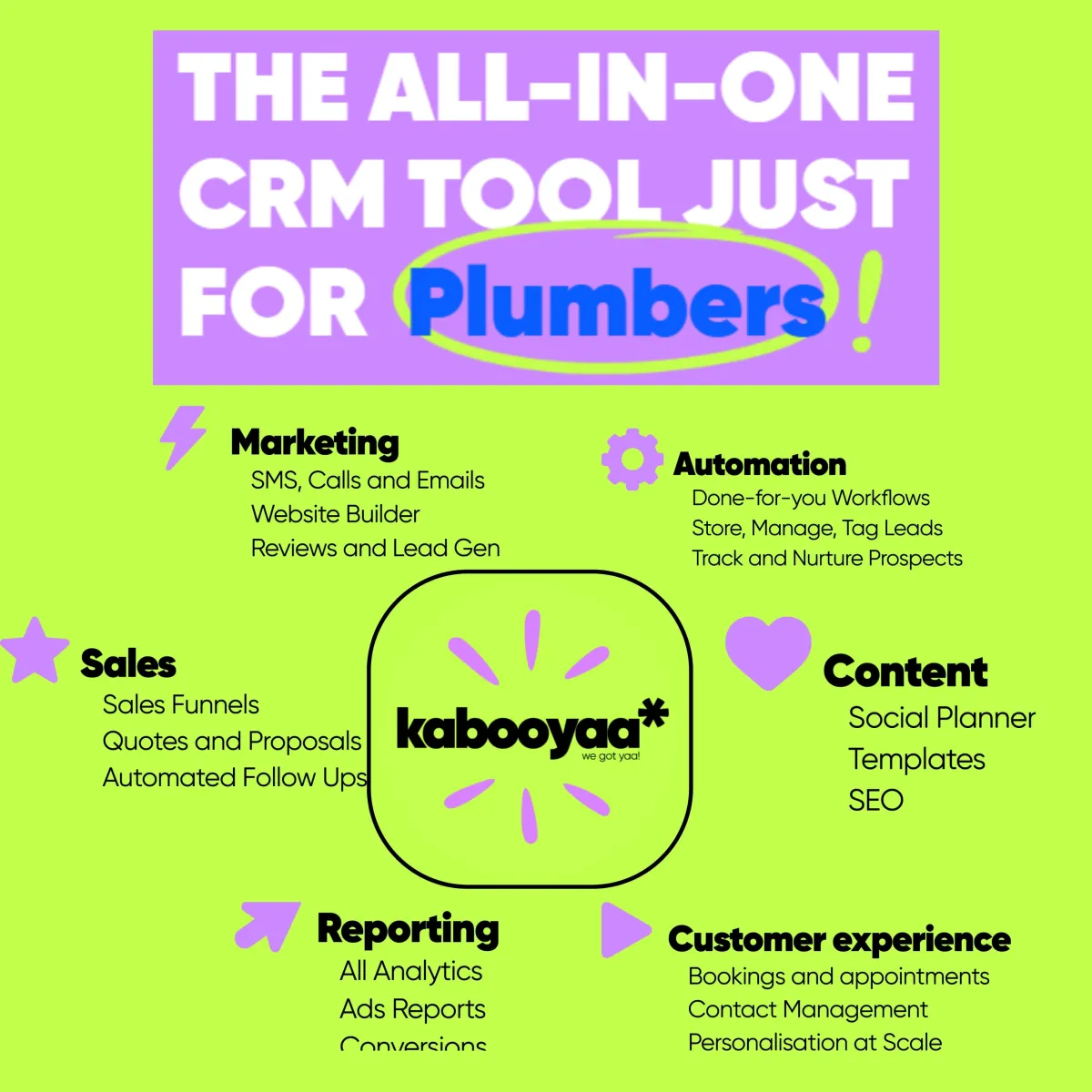
The reason most deposit policies die isn't customer resistance — it's admin. You're on the tools, the quote gets accepted at 7pm, and chasing a payment link is one more thing you don't do. This is exactly the kind of job a trades-focused CRM like Kabooyaa should be doing for you automatically:
- Quote accepted → an SMS and email fire instantly with a secure payment link for the deposit amount.
- Deposit unpaid after 24 hours → an automatic friendly nudge goes out, so the date doesn't sit soft in your calendar.
- Deposit paid → the job is confirmed in your schedule, the customer gets a confirmation with the date and arrival window, and reminders go out before the day.
- Everything reconciles against the job, so the final invoice already shows the deposit deducted.
Set it up once and every accepted quote follows the same path — no chasing, no forgetting, no awkwardness. Tradies using Kabooyaa's automated payments and follow-up workflows typically find the deposit conversation disappears entirely: the system asks, so they never have to.
Handling the rare objection
Occasionally someone baulks. Keep it simple: the deposit secures a locked-in date and covers materials ordered specifically for their job, and it comes straight off the final bill. If a customer still refuses a modest deposit on a multi-thousand-dollar job, treat that as free information — they were the cancellation risk your policy exists to filter out.
The bottom line
A deposit policy costs nothing to implement, kills most no-shows and cancellations, protects your cash flow on material-heavy work, and signals that you run a professional operation. Pair a clear policy (10–20%, stated at booking, deducted from the invoice) with automation that sends the payment link and chases it for you, and it runs itself.
Want deposits, booking confirmations and payment reminders running on autopilot? Book a free demo of Kabooyaa — the CRM built for Australian trades businesses — and see how much admin you can hand off this week.


