Database Reactivation for Tradies: Turn Old Customers Into This Month's Jobs
Database Reactivation for Tradies: Turn Old Customers Into This Month's Jobs
Ask any plumber or sparkie where their next job is coming from and they'll usually say Google, word of mouth, or paid ads. Almost nobody says "the 400 people I've already worked for." That's a mistake, because your old customer list is the cheapest, warmest source of work you own — and most trade businesses never touch it.
Database reactivation is the simple practice of systematically messaging past customers to bring them back. Done properly with a CRM like Kabooyaa, it runs itself in the background and quietly tops up your calendar during the quiet weeks.
Why your old list beats new leads
A new lead from a paid ad costs Australian trades businesses anywhere from $40 to $250 depending on the trade and the city. That lead doesn't know you, is probably ringing three of your competitors, and haggles on price.
A past customer is the opposite. They already know you turn up on time and do tidy work. There's no comparison shopping and no price shock. The only reason they haven't booked you again is that they forgot your name — people lose business cards, and "that plumber we used a couple of years ago" is genuinely hard to find again.
Jobs hiding in your customer database
Think about what's sitting in your job history right now:
- Plumbers: hot water systems you installed 8–10 years ago are approaching replacement age. Tap washers, toilet internals and flexi hoses you fitted are due for a check.
- Electricians: smoke alarm checks are an annual requirement, switchboards you flagged as "getting old" two years ago are still getting older, and every EV bought in your suburb is a charger install waiting to happen.
- Aircon and solar: services fall due every 12 months like clockwork, and early solar systems are prime for battery retrofits.
- Roofers and painters: exteriors you painted 7+ years ago and roofs you last inspected before the last two storm seasons.
None of these customers will ring you unprompted. All of them are likely to say yes to a well-timed message.
The reactivation message that works
Keep it short, personal and useful. A text beats an email for tradies — open rates on SMS sit above 90%. Something like:
"Hi Sarah, it's Dave from Dave's Plumbing — we replaced your hot water system back in 2019. They're usually good for 8–10 years, so it might be worth a quick health check before winter. Want me to book one in? No worries if not."
No spam, no discounts you can't afford, no "Dear valued customer." Just a tradie who kept good records being helpful at the right moment.
How to automate it so it actually happens
The reason reactivation never happens manually is simple: you're on the tools all day, and nobody sits down on a Sunday night to text 60 old customers. This is exactly what a trades CRM is for:
- Tag every job by type and date as you go — "HWS install 2019", "switchboard 2021", "aircon service due July".
- Set automated triggers — 12 months after an aircon service, 8 years after a hot water install, every June for smoke alarm checks.
- Send in small batches — 20–30 messages a day, so replies come in at a pace you can handle.
- Route replies straight to your job pipeline — anyone who says "yes please" becomes a booking, automatically.
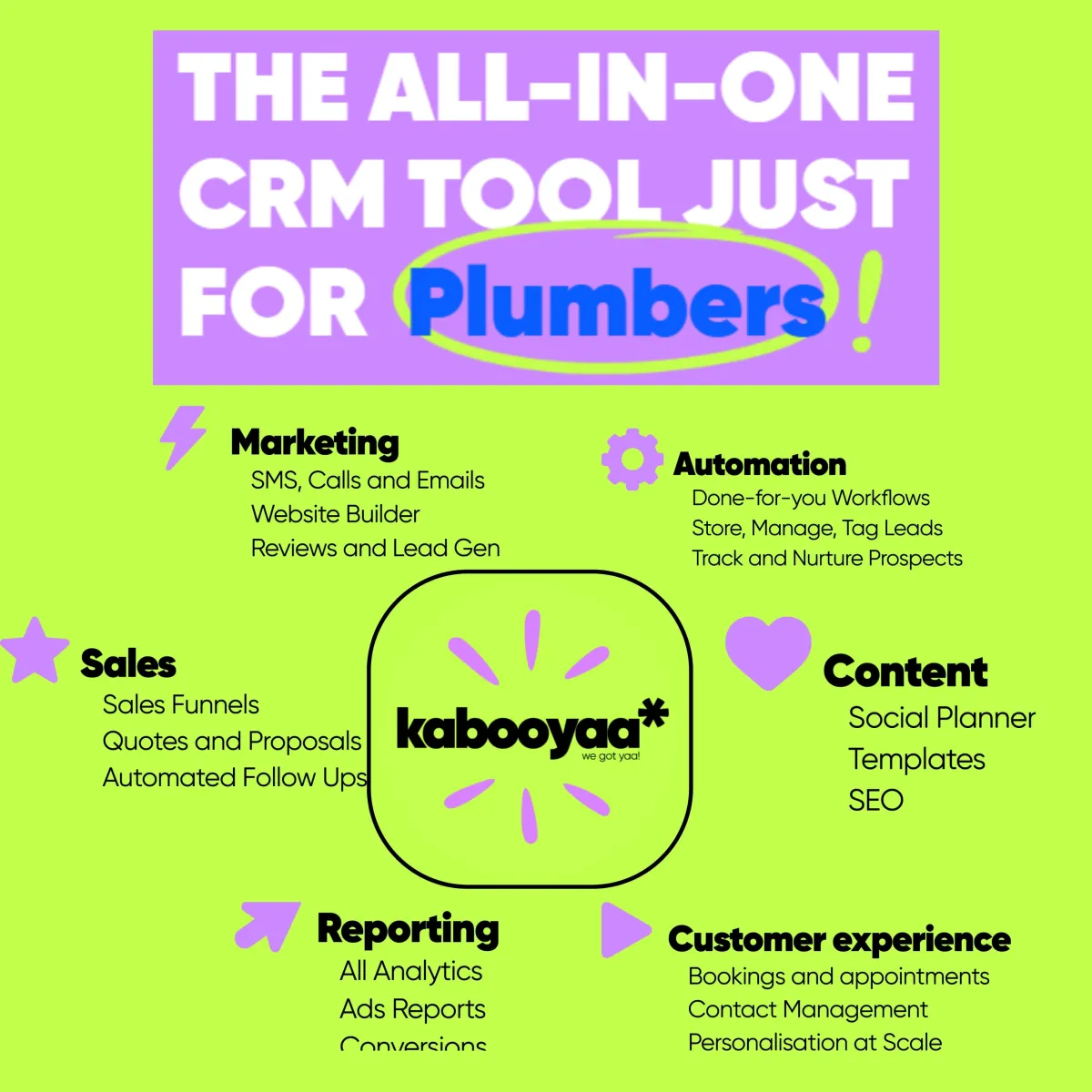
Kabooyaa's CRM for Australian trades businesses handles all of this out of the box — the tagging, the scheduled SMS campaigns, and the pipeline that turns replies into booked jobs, alongside missed-call text-back and review automation.
What a realistic result looks like
Say you've got 500 past customers and you message them over a month. A typical, unremarkable outcome: 15–20 replies and 8–12 booked jobs. If your average job is worth $600, that's $5,000–$7,000 of work from people who already trusted you — for the cost of a few hundred text messages. Run it every quarter and it compounds, because every new job feeds the database.
Start this week
You don't need a perfect database to begin. Export whatever you've got — invoices, phone contacts, job sheets — pick the 50 customers whose work is most obviously due for attention, and send them the message above with your own details. Then set up the automation so you never have to think about it again.
If you'd like the whole thing running on autopilot — reactivation campaigns, missed-call text-back, quoting and reviews in one place — book a free demo at www.kabooyaa.com and we'll show you how other Aussie tradies are doing it.


