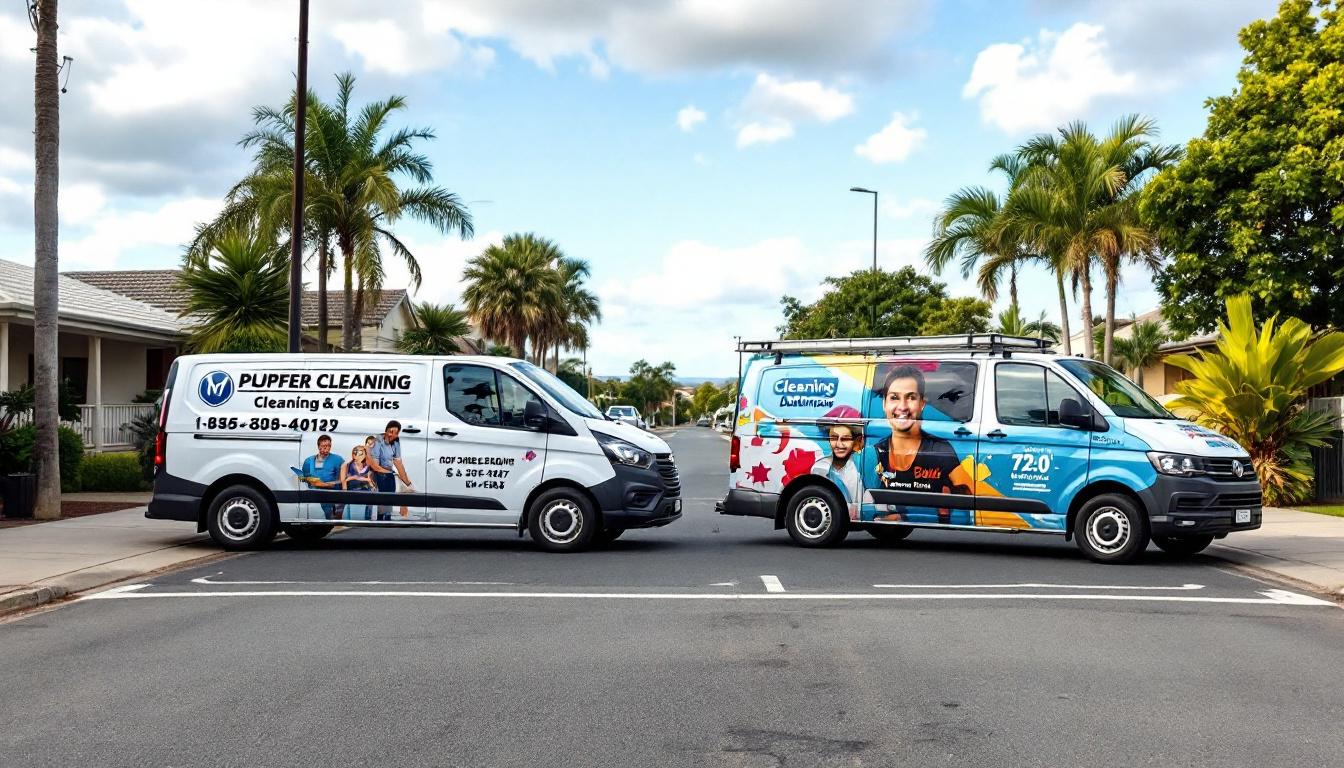
Cleaning Franchise vs Going Independent in Australia: Pros, Cons, and Numbers
Choosing between a cleaning franchise and going independent in Australia comes down to one question: do you want a faster start with lower upside, or a slower start with higher long-term potential? The franchise gives you a system and a brand. Independence gives you control and full margins. Neither is the wrong answer — it depends on your experience, capital, and appetite for building from scratch. Here's the complete breakdown.
The Cleaning Industry in Australia: A Quick Snapshot
The Australian cleaning industry generates around $12 billion per year and is split between commercial cleaning (offices, schools, facilities management) and residential cleaning (homes, Airbnbs, end-of-lease). Both sectors have strong demand, low barriers to entry, and a fragmented competitive landscape — which means there's room for both franchises and independents.
Labour is the biggest cost in either model, typically 40-60% of revenue. Equipment and supplies are modest. The real competitive variable is customer acquisition, retention, and scheduling efficiency.
What You Get With a Cleaning Franchise
Australian cleaning franchises (Jim's Cleaning, Jani-King, Electrodry, OzClean, Maid2Clean, and others) sell you:
- A recognised brand name — customers already know and trust it
- A defined territory — geographic exclusivity to prevent internal competition
- A system — cleaning protocols, quoting tools, software, uniforms, and processes
- Initial training — how to run the operation, not just clean
- Ongoing support — marketing, customer disputes, HR guidance
- Referrals from the franchisor — leads generated by national advertising flow to franchise owners
In exchange, you pay:
- An upfront franchise fee ($10,000–$50,000+ depending on the brand and territory size)
- Ongoing royalties (typically 8-12% of gross revenue)
- Marketing levies (typically 1-3% of gross revenue)
- Required purchase of approved products/equipment
Franchise Cost Example (Residential Cleaning)
| Item | Typical Range |
|---|---|
| Franchise fee | $15,000 – $35,000 |
| Equipment and startup kit | $3,000 – $8,000 |
| Working capital (3 months) | $10,000 – $20,000 |
| Total startup cost | $28,000 – $63,000 |
| Monthly royalties (on $15k revenue) | $1,200 – $1,800 |
| Monthly marketing levy | $150 – $450 |
What You Get Going Independent
As an independent cleaning business, you build from zero:
- No brand recognition — you start unknown
- No territory protection — anyone can compete in your area
- No system provided — you build or buy your own processes
- No referrals from anyone — all marketing is your responsibility
- Full control — pricing, services, branding, culture, systems
In exchange:
- Low startup cost ($5,000–$15,000 to equip and register properly)
- No royalties — every dollar of revenue belongs to your business
- No restrictions on how you operate, what you charge, or what you offer
Independent Cost Example (Residential Cleaning)
| Item | Typical Range |
|---|---|
| ABN registration, insurance | $500 – $1,500 |
| Equipment (vacuums, mop systems, microfibre) | $2,000 – $5,000 |
| Supplies (initial stock) | $500 – $1,000 |
| CRM software (e.g. Kabooyaa) | $100 – $300/month |
| Initial marketing (Google Ads, flyers) | $500 – $2,000 |
| Working capital (2 months) | $5,000 – $10,000 |
| Total startup cost | $8,500 – $19,800 |
Revenue and Margin Comparison
This is where the numbers get interesting.
Franchise (residential cleaning, solo operator): - Gross revenue (30 cleans/week at $150 avg): $18,000/month - Royalties (10%): -$1,800 - Marketing levy (2%): -$360 - Labour (yourself + 1 casual): -$7,000 - Supplies and equipment: -$600 - Insurance, admin: -$400 - Net profit: ~$7,840/month
Independent (same volume and pricing): - Gross revenue: $18,000/month - Labour: -$7,000 - Supplies and equipment: -$600 - Software, marketing: -$400 - Insurance, admin: -$400 - Net profit: ~$9,600/month
The independent operator clears roughly $1,760 more per month on the same revenue — about $21,000 per year. Over 5 years, that's over $100,000 in additional take-home, not counting growth.
But the franchise operator got to $18,000/month faster, with less marketing effort. That early momentum has its own value.
Territory Rights: What They Mean and Don't Mean
Franchise territory rights give you geographic exclusivity within the network. Other franchisees of the same brand can't operate in your area.
What they don't protect you from: independent competitors, other franchise brands, and the franchisor changing territory boundaries at renewal. Always read the Franchise Agreement carefully — territory terms vary significantly between brands.
Territory size matters enormously. A residential cleaning territory in a suburb of 10,000 households is very different from one covering 40,000. Ask how many potential customers are in your territory and what the current penetration rate is.
The Customer Acquisition Reality
This is where independent operators most often underestimate the challenge.
A franchise with national advertising (TV, radio, digital) generates brand awareness that reduces your cost per customer acquisition. Jim's Cleaning, for example, is a household name — customers who search "cleaning company" often have franchise names top of mind.
An independent has to build that awareness from scratch. That means Google Business Profile optimisation, Facebook marketing, Google Ads, referral programs, letterbox drops, and word of mouth. All of which take time and money.
For an independent to compete, they need a system for lead capture and customer follow-up from day one. See /post/cleaning-business-customer-retention-repeat-bookings for the retention strategies that make an independent sustainable. And /post/ai-chatbot-for-trade-businesses-australia explains how to capture leads at all hours without extra staff.
When a Franchise Makes More Sense
Consider a franchise if:
- You have limited business experience and want a proven playbook
- You want to start generating revenue quickly with a recognised brand
- You're not confident in marketing and sales from scratch
- The territory available has strong demand and low current penetration
- The franchise fee is reasonable relative to the territory value
When Going Independent Makes More Sense
Consider going independent if:
- You have prior business or cleaning industry experience
- You're comfortable building marketing systems from scratch
- You want to build equity in a business you fully own
- You want flexibility to expand into commercial, Airbnb, or specialised cleaning
- You're committed to the long game (3+ years)
The Middle Path: Starting Independent, Building Your Own System
Many of the most successful cleaning businesses in Australia started as one person with a mop and built progressively. The key is treating it like a business from the first month, not a job you happen to run yourself.
That means:
- CRM software from the beginning — track every enquiry, every customer, every job
- Automated reminders and follow-ups — don't let customers lapse without noticing
- Google reviews from the start — 50 reviews in the first year builds credibility that takes franchises years to establish locally
- Referral systems — ask every happy customer for a referral within 48 hours of the clean
With the right systems, an independent cleaning business can build a client base that a franchise owner would envy — without the royalties eating into margin.
Frequently Asked Questions
Can I buy out of a cleaning franchise if it's not working? Yes, but it's not simple. Franchise agreements typically have exit clauses that include restrictions on operating in the same industry or territory for a set period after exit (non-compete clauses). Read the exit provisions carefully before you sign the initial agreement.
Is cleaning franchise income guaranteed? No. Franchisors may promise a minimum client base or income guarantee for a short period, but your long-term income depends on your ability to service and retain clients. Guarantees, if they exist, are usually limited to the first 3-6 months.
Do I need a licence to run a cleaning business in Australia? For residential cleaning, no specific licence is required. You'll need an ABN, public liability insurance (minimum $5-10 million cover), and if you employ staff, workers' compensation. For specialised cleaning (biohazard, asbestos, height work), additional certification applies.
Which franchise has the best reputation in Australia? Jim's Cleaning and Electrodry are well-known residential brands. Jani-King and Scape are strong in commercial. Reputation varies by territory and by the individual franchise owner — read independent reviews, talk to current franchisees, and ask the franchisor for a list of franchisee contacts (then call ones not on their provided list).
What software do independent cleaning businesses use to manage bookings? Kabooyaa is used by cleaning businesses for CRM, booking management, automated reminders, and Google review collection. The review automation alone makes a measurable difference to local search rankings within a few months.
Whether you go franchise or independent, Kabooyaa gives cleaning businesses the automation and CRM infrastructure to manage clients, chase reviews, and follow up on leads without adding headcount. Talk to the team about how cleaning businesses are using it.


